
How to Measure Your Windows for Custom Blinds (Step-by-Step)
Getting the right fit starts with the right measurements. Learn how to measure your windows for custom blinds in a few simple steps — including inside vs. outside mount, common mistakes to avoid, and a handy recording table.
3/15/20264 min read
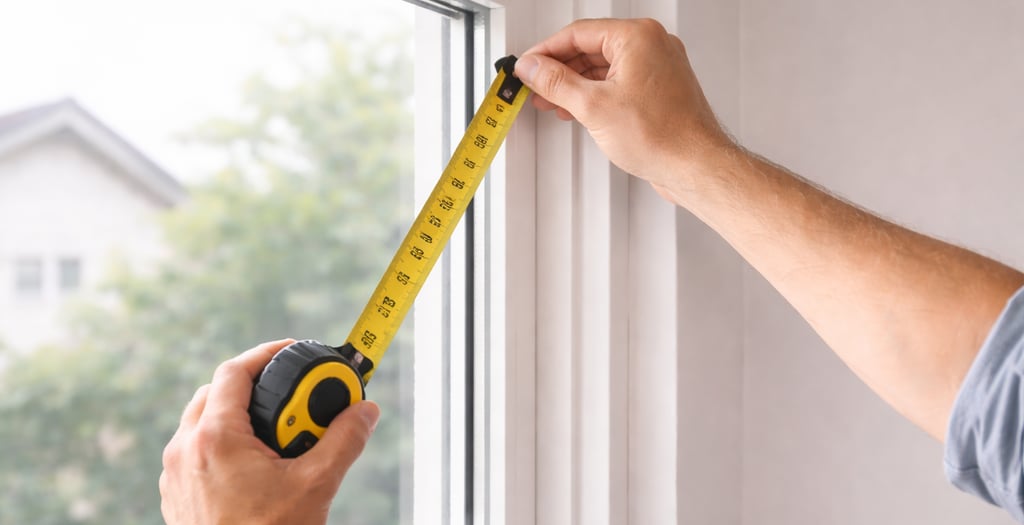
Getting custom blinds that fit perfectly starts long before you browse fabrics or pick a colour — it starts with accurate measurements. Whether you're ordering roller blinds, zebra blinds, or honeycomb shades, a small measuring mistake can mean gaps, overlaps, or blinds that simply won't fit.
The good news? Measuring your windows is easier than you think. This step-by-step guide will walk you through everything — from the tools you need to the exact numbers to record.
What You'll Need
A steel measuring tape (fabric tapes can stretch and give inaccurate readings)
A pencil and notepad — or your phone to take notes
A step ladder if your windows are high
A helper is useful but not required
Step 1: Decide — Inside Mount or Outside Mount?
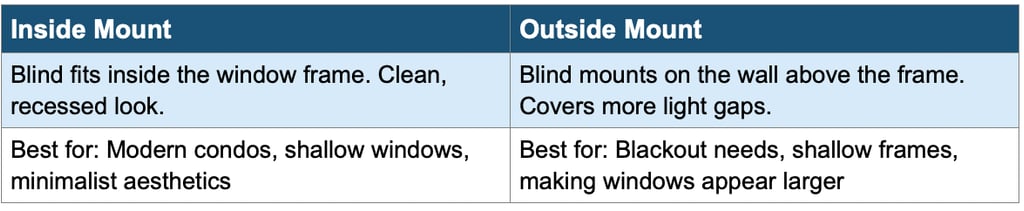
Before you measure, you need to decide how you want the blinds to be installed. This choice affects what you measure and how.
Inside Mount
Outside Moun
💡 Pro Tip: Most Toronto condo windows have shallow frames — if your frame depth is less than 2 inches, an outside mount will give you a better result.
Step 2: Measuring for an Inside Mount
For inside mounts, you're measuring the exact interior dimensions of your window opening. Here's how:
Measure the Width
Place your tape measure inside the window frame, from left wall to right wall
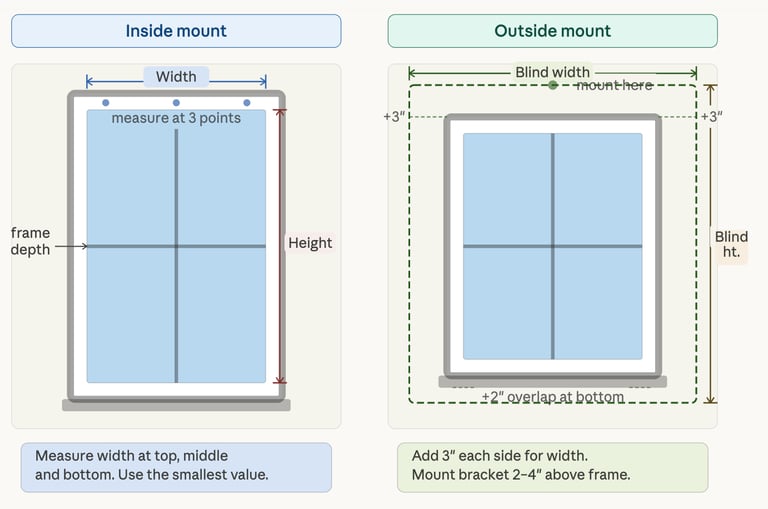
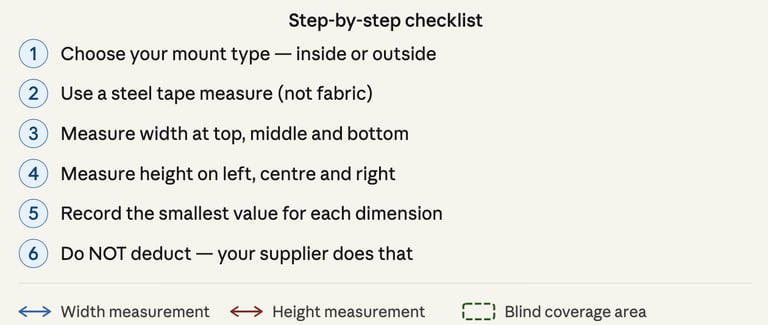
Measure in three places: top, middle, and bottom of the window
Record the smallest measurement — this ensures the blind will fit without gaps
Do NOT deduct anything — your blind manufacturer will make the necessary deductions for fit
Measure the Height
Measure from the top of the window opening straight down to the sill
Measure in three places: left side, centre, and right side
Again, record the smallest measurement
If there is no sill, measure to where you want the blind to end
Step 3: Measuring for an Outside Mount
For outside mounts, you decide the size of the blind — it will hang on the wall or above the window frame. Here's the process:
Measure the Width
Measure the width of your window frame (outside edge to outside edge)
Add 3 to 4 inches on each side (6–8 inches total) to minimize light gaps
This is the width you'll order — you're in control here
Measure the Height
Decide where above the frame you want to mount the bracket (typically 2–4 inches above)
Measure from that point down to where you want the blind to end
For blackout blinds, extend to the floor or sill and add 2–3 inches overlap at the bottom
Step 4: Record Your Measurements
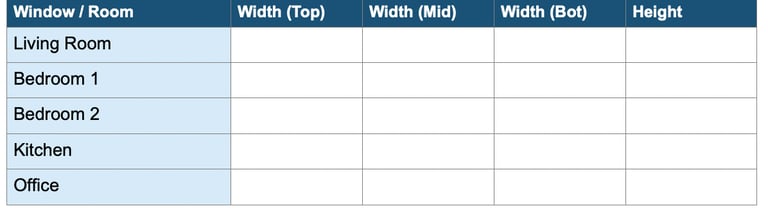
Use this simple table to record measurements for each window before placing your order:
Common Measuring Mistakes to Avoid
Using a fabric tape measure. These can stretch and give inaccurate readings. Always use a rigid steel tape.
Only measuring once. Windows are rarely perfectly square. Always measure in three spots and use the smallest number.
Confusing inside vs. outside mount dimensions. Know your mount type before you start — the numbers will be different.
Forgetting to account for handles and cranks. Check that an inside-mounted blind won't hit your window hardware when it rolls up or down.
Measuring in feet instead of inches. Always submit measurements in inches (or millimetres) to avoid conversion errors.
Room-by-Room Tips:
Condos & High-Rises: Shallow frames are common — consider an outside mount. Floor-to-ceiling windows may benefit from motorized blinds for convenience.
Bedrooms: For blackout blinds, always use an outside mount and add 3+ inches on all sides to eliminate light bleed around the edges.
Kitchens: Measure carefully around handles and backsplash tiles. A shorter drop length (to the sill only) keeps things practical.
Home Offices: Sunscreen roller blinds work best here. Measure for an outside mount to cover the full window and reduce glare on screens.
Children's Bedrooms: Blackout is key. Cordless blinds are safest — factor in that cordless styles need to be ordered to precise measurements.
Not Sure? Let Us Measure For You — Free!
At Easyfit Blinds, every order includes a free in-home site visit where our experts take precise measurements for you. No guesswork, no risk of ordering the wrong size — just perfectly fitted custom blinds delivered and installed within ~2 weeks.
📞 647-955-8148 | easyfitblinds.ca | Toronto & GTA
Frequently Asked Questions
Do I need to measure in millimetres or inches?
Either works — just be consistent. Most Canadian blind suppliers accept both. At Easyfit Blinds, we work with whichever you prefer.
What if my window isn't square?
This is very common, especially in older homes. Always measure in three places and use the smallest dimension. Our team will account for any irregularities during the site visit.
Can I order blinds without a site visit?
Yes, but we recommend a site visit for the most accurate results. It's free and ensures a perfect fit.
What's the minimum depth needed for an inside mount?
Generally, you need at least 1.5 to 2 inches of depth for a standard inside mount. If your frame is shallower, an outside mount is the better option.
Ready to Order Your Custom Blinds?
Now that you have your measurements, the fun part begins — choosing your fabric, opacity, and style. Easyfit Blinds offers a full range of custom window coverings for homes and businesses, including roller blinds, zebra blinds, honeycomb shades, silhouette blinds, drapery, and even smart film.
Every order comes with free installation, a 5-year warranty, and delivery within 2 weeks. Get in touch today for a free no-obligation quote


Easy Fit Blinds
Made to Measure Quality Blinds
Our Office Locations:
34 Minowan Miikan Lane, Toronto, Ontario